

Natural Macrocycles
Macrocycles are chemically difficult systems both to synthesize and model, but are often difficult to replace whilst maintaining the observed biological activity. Many bioactive natural products have a macrocycle at their core but are often difficult to resynthesize, optimize and hence develop. Figure 1 shows examples of macrocycle containing compounds which have advantageous biological function.
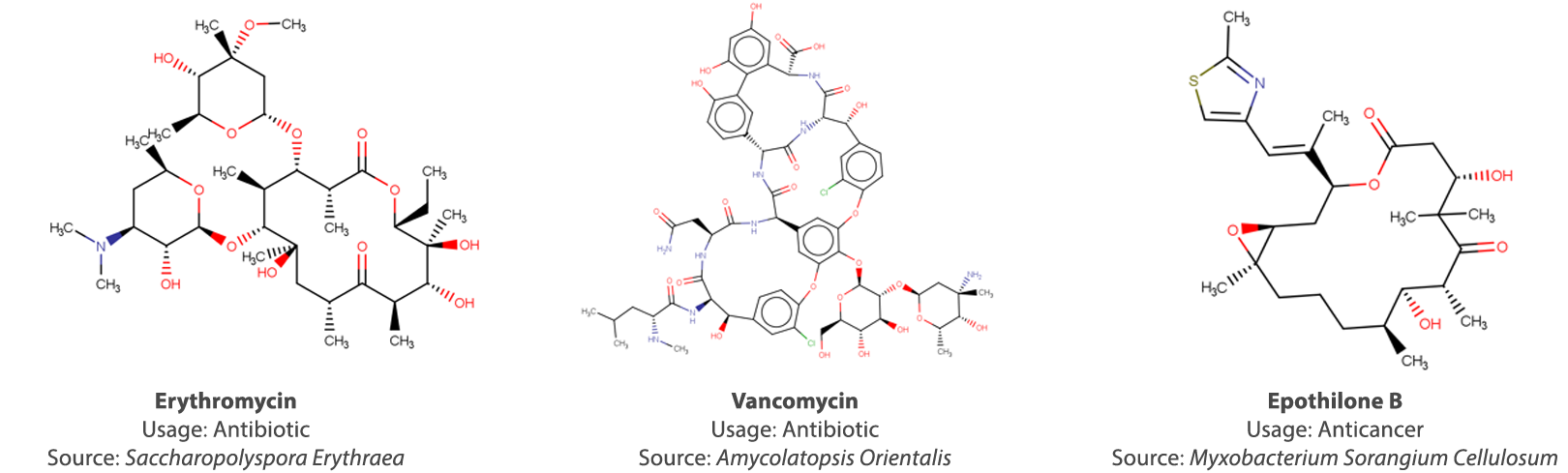
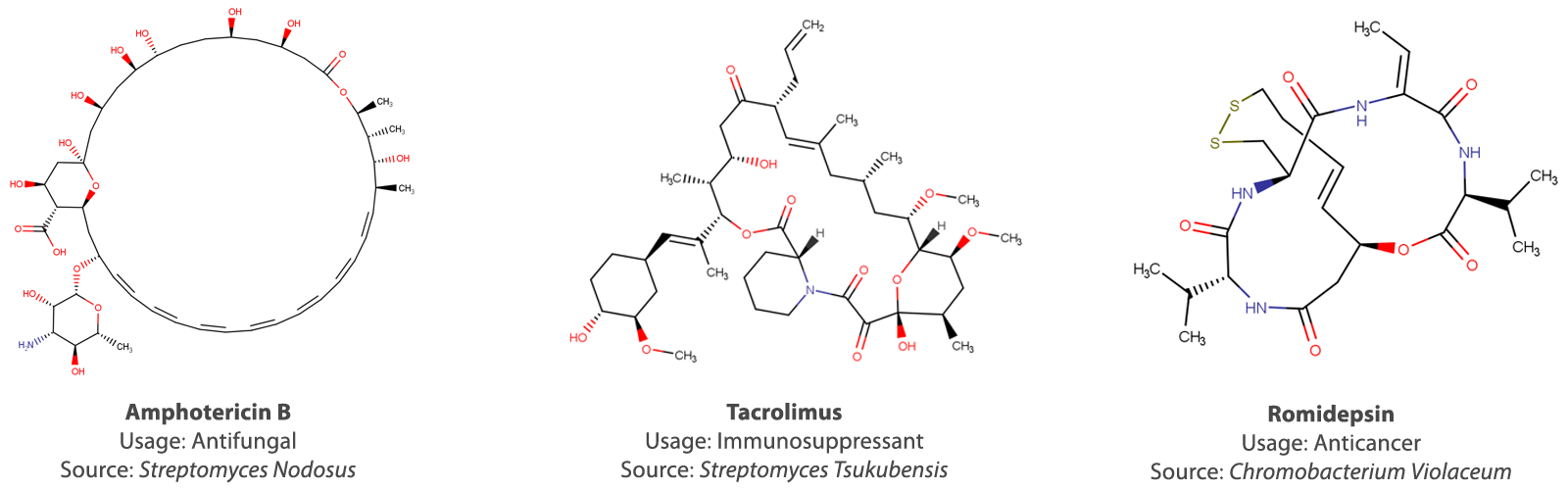
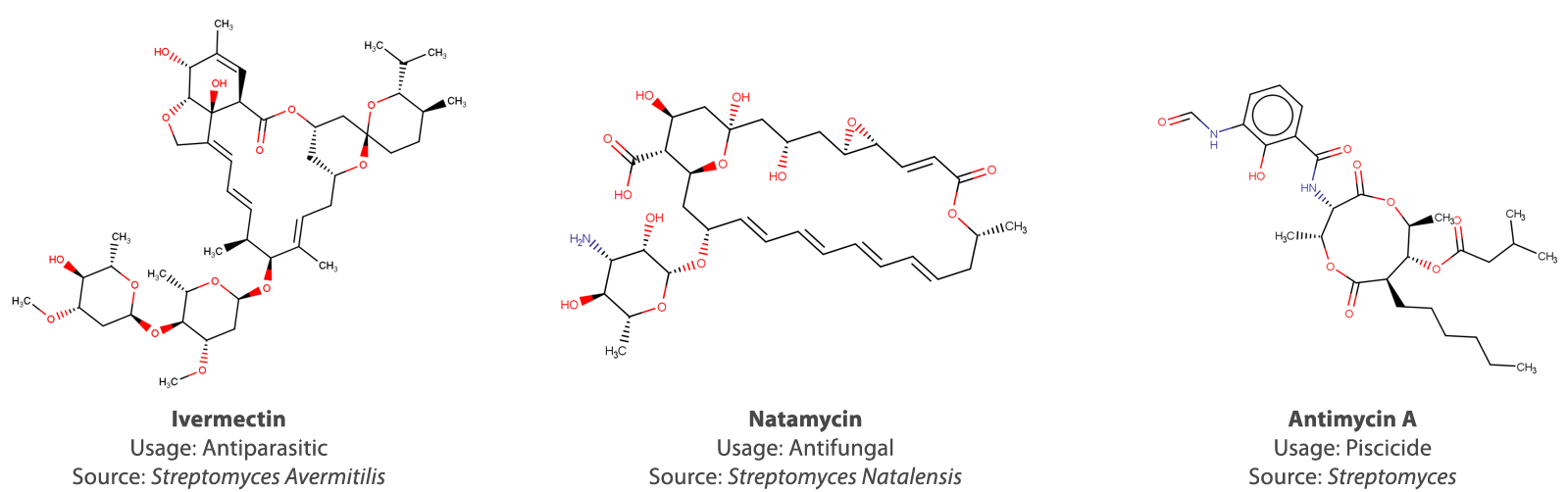
Figure 1. Examples of macrocyclic natural products with their original source and usage.
Macrocycles
Macrocycles tend to have very defined bioactive conformations with defined sidechain growth vectors which are complementary to the protein binding site which help impart both biological activity and biological selectivity. This is also complemented by the ability of macrocycles to mask their features by folding, for example this allows the high molecular weight and charged systems like vancomycin (figure 1) to be effective antibiotics by allowing unexpected cell penetration if only considering 2D chemical properties.
One of the main difficulties with modeling macrocycles is the identification of these bioactive conformations, as macrocycles often have conformationally remote but energetically accessible geometries. There are some small molecule and protein bound macrocycle structures available which can provide useful information about the potential bioactive conformations, examples of this are shown in figure 2.
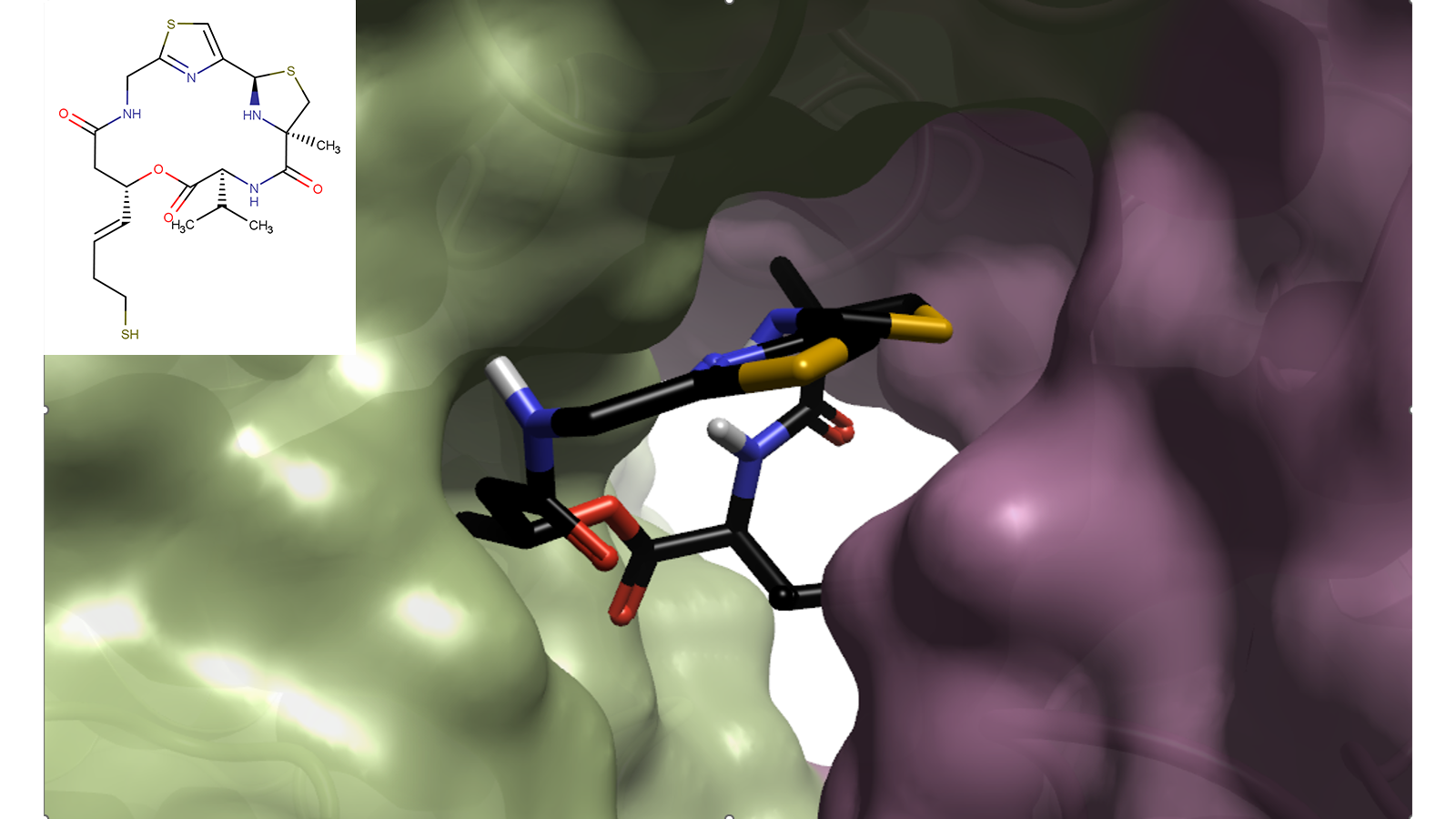
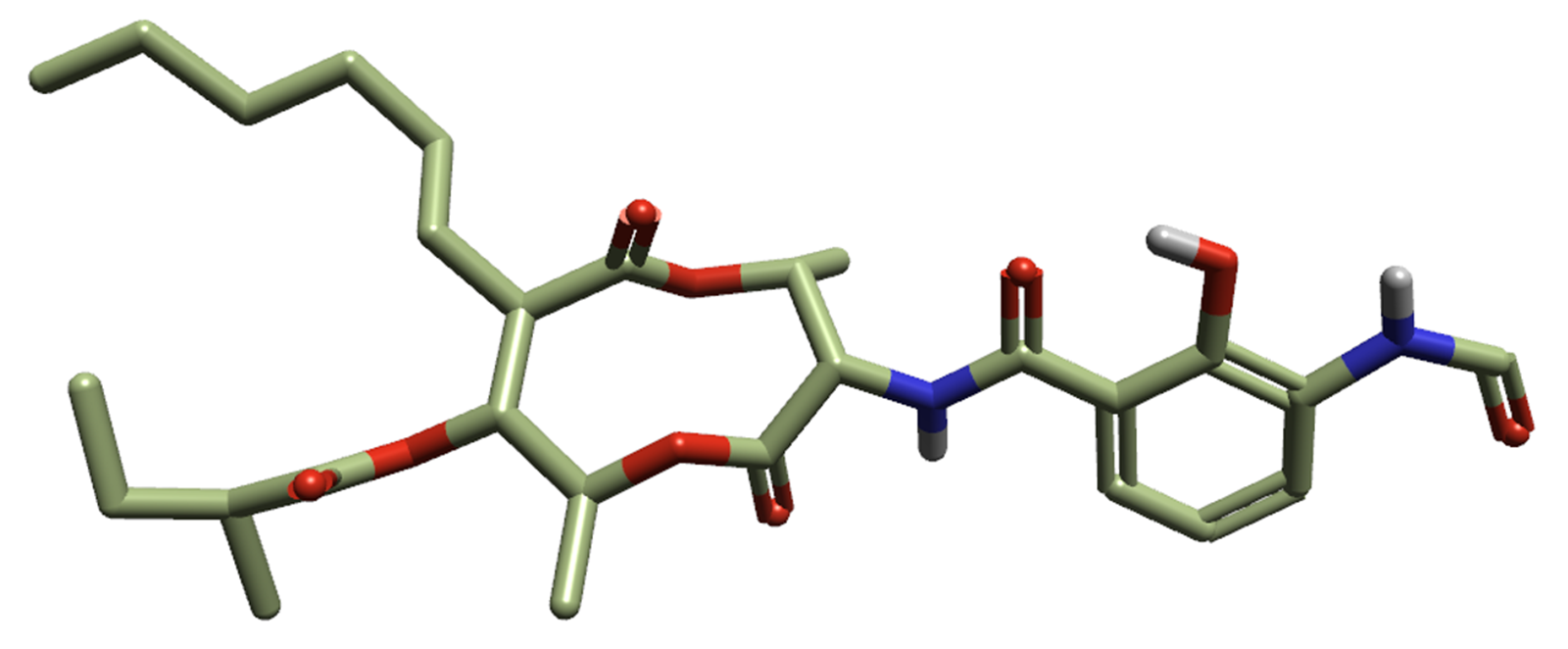
Figure 2. The 3rqd protein ligand crystal structure with a bound macrocyclic ligand1 (upper image) and the small molecule crystal structure of a macrocyclic small molecule2 (lower image).
If any experimental example of the macrocycle under investigation cannot be found or the conformation is inconsistent with the observed activity or binding site, then additional conformation analysis can be undertaken to establish the potential bioactive conformation. Conformational analysis on macrocyclic compounds is typically difficult task but can be undertaken using multiple computational methods, molecular dynamics, ring disconnection, and extending traditional conformational search methods.
Moving from Macrocycle Space
After establishing the probable bioactive conformation, the next phase is to develop non-macrocyclic analogues which maintain the established growth vectors whilst establishing a novel IP position hopefully with improved synthetic tractability. The overall goal is to identify novel chemical positions with novel IP and an improved developmental pathway. Identification of novel chemistry can be via a virtual screening methodology replacing the entire molecule structure or using bioisosteric replacement replacing only the macrocycle system. Replacing only the macrocycle region has the advantage that the sidechains from the macrocycle can be transferred onto the new core. This side chain transfer can provide a more advantageous starting point, as these side chains are already naturally optimized for the binding site, but may still require additional optimization for the new core or to consolidate the new IP.
Largazole Example
Using the 3rqd systems (figure 2) as an example using Flare™ Spark™ to replace the macrocycle core of Largazole generates starting points which could be used as starting points for new chemical series, these are shown in figure 3.

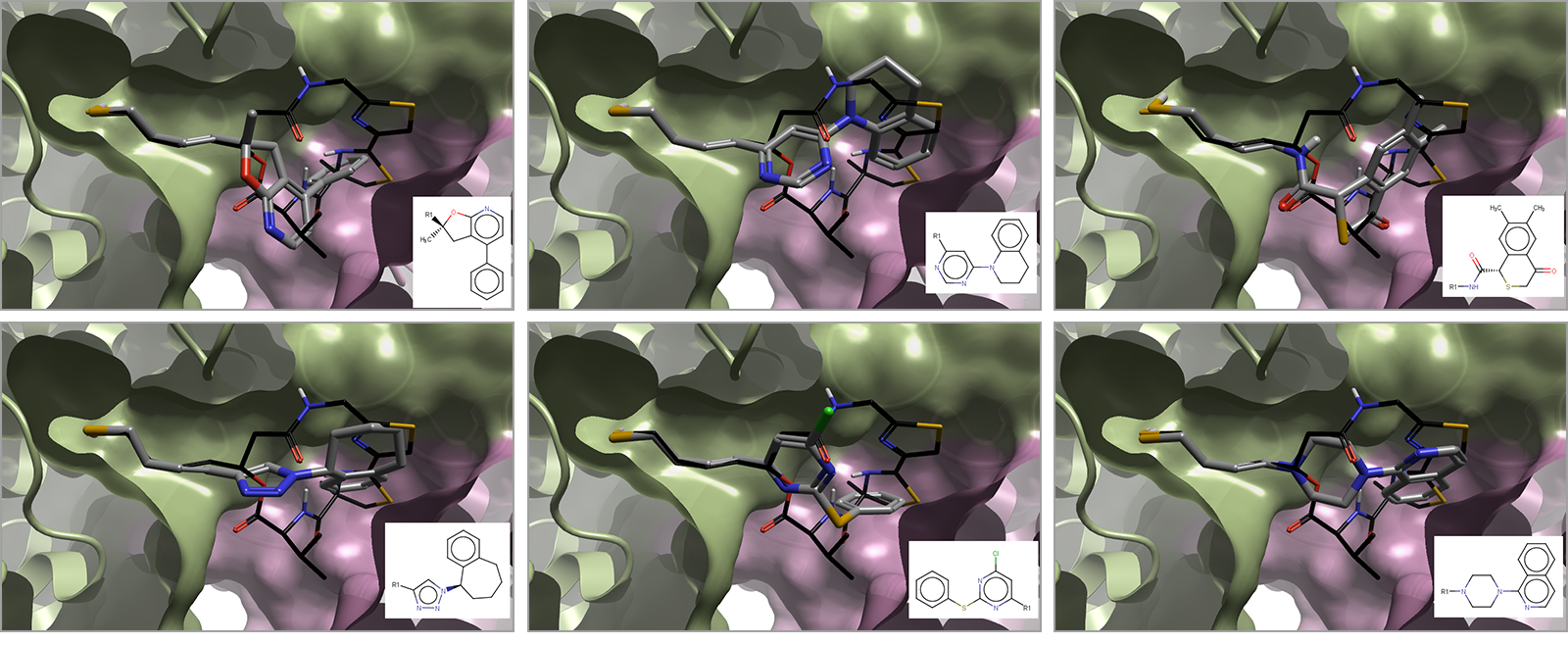
Figure 3. The starting macrocycle in the protein context (3rqd crystal structures) and potential bioisosteric compounds from Spark™
This example shows the potential workflow to generate novel non-macrocyclic compounds from a crystal structure with a macrocyclic ligand. For a published example using Cresset technology to identify a novel core when starting from a macrocycle system, see the following paper. In this instance, an analogue of fenpicoxamid was used without a starting protein crystal structure and instead using a built mitochondrial complex III homology model3:
Jackson, V; Sherer, C; Jordan, L; Clohessy, T. Unveiling the potential: exploring the efficacy of complex III inhibitors in fungal disease control, Pest Management Science 2024, 8. https://doi.org/10.1002/ps.8384
References
- Cole, Kathryn E; Dowling, Daniel P; Boone, Matthew A; Phillips, Andrew J; Christianson, David W, Structural Basis of the Antiproliferative Activity of Largazole, a Depsipeptide Inhibitor of the Histone Deacetylases J. Am. Chem. Soc. 2011, 133, 32, 12474–12477. https://doi.org/10.1021/ja205972n
- Kim, H., Esser, L., Hossain, M. B., Xia, D., Yu, C. A., Rizo-Rey, J., Van Der Helm, D., & Deisenhofer, J. Structure of antimycin A1, a specific electron transfer inhibitor of ubiquinol-cytochrome c oxidoreductase [6]. J. Am. Chem. Soc. 1999, 121(20), 4902-4903. https://doi.org/10.1021/ja990190h
- Jackson, V; Sherer, C; Jordan, L; Clohessy, T. Unveiling the potential: exploring the efficacy of complex III inhibitors in fungal disease control. Pest Management Science 2024, 8. https://doi.org/10.1002/ps.8384